
01शिखर
Shikhara
The soaring spire above the sanctum represents Mount Meru, the axis of the universe. Its kalash crown marks the point where earth meets heaven.
A Hindu temple is a map of the universe. Walk through it, and you journey from the world to the Divine.
Every temple is laid out on the Vastu Purusha Mandala — a square grid in which each cell belongs to a deity, with Brahma himself at the very centre.
In Vastu Shastra the central square, the Brahmasthana, is the most sacred space in any building: the point from which the whole structure radiates. In a temple of Lord Brahma, the Creator literally sits at the heart of his own creation.
The path of parikrama moves clockwise, keeping the Lord always on the devotee's right, and the white shikhara with its saffron dhwaja can be seen from far across the town.
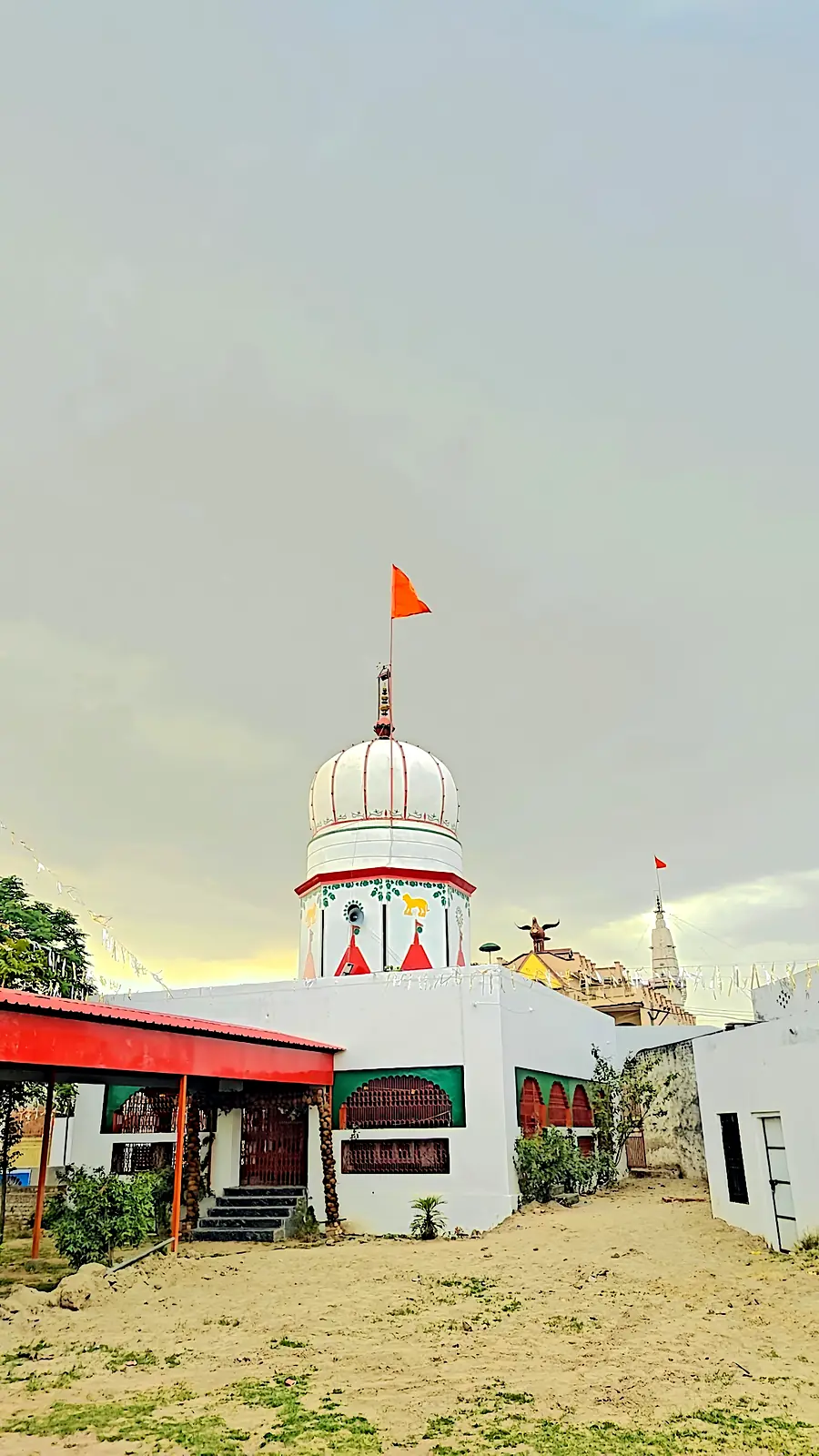
The soaring spire above the sanctum represents Mount Meru, the axis of the universe. Its kalash crown marks the point where earth meets heaven.
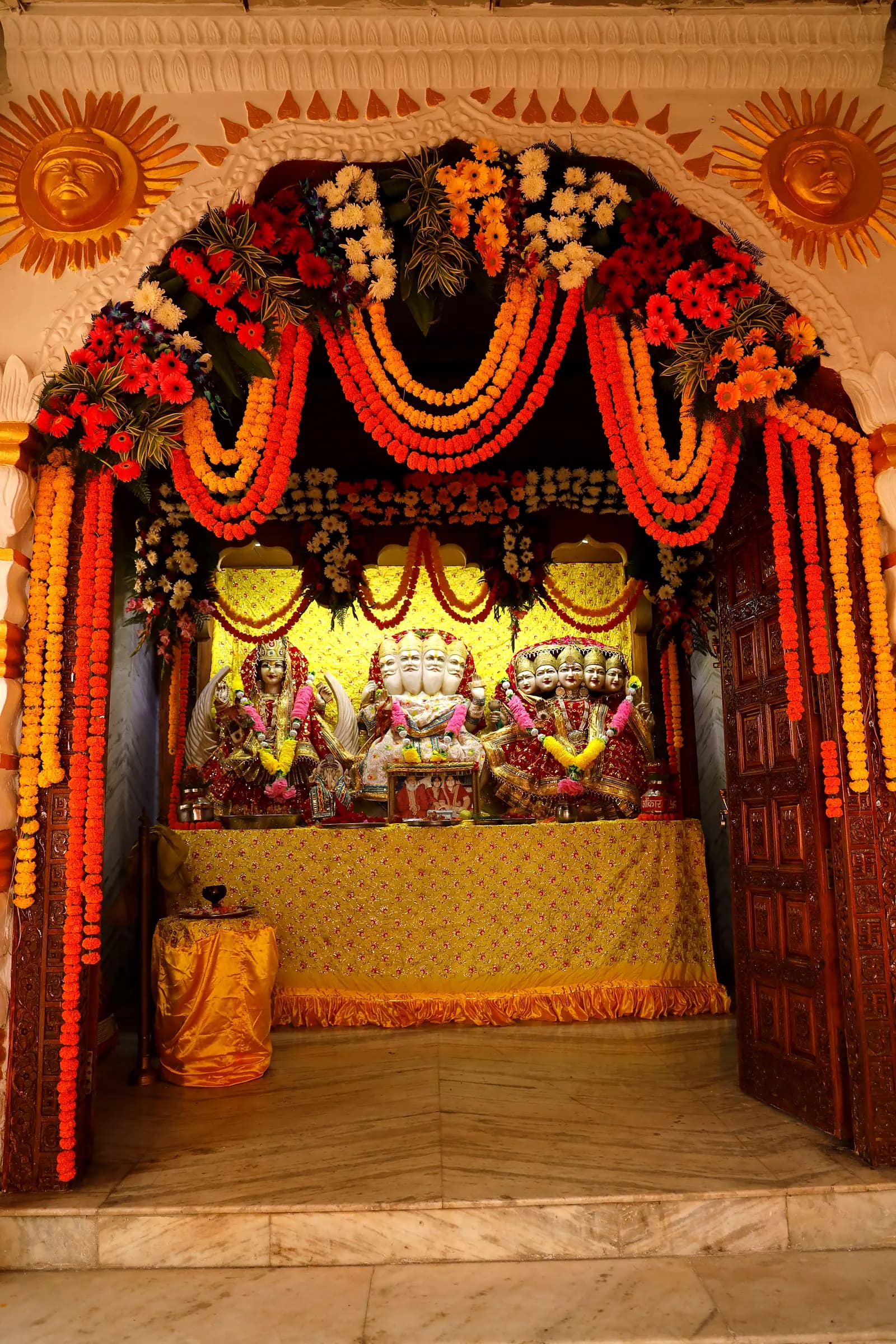
The 'womb chamber' — small, still and sacred — houses the murti of Lord Brahma. Here, as in the cosmic womb, creation begins.
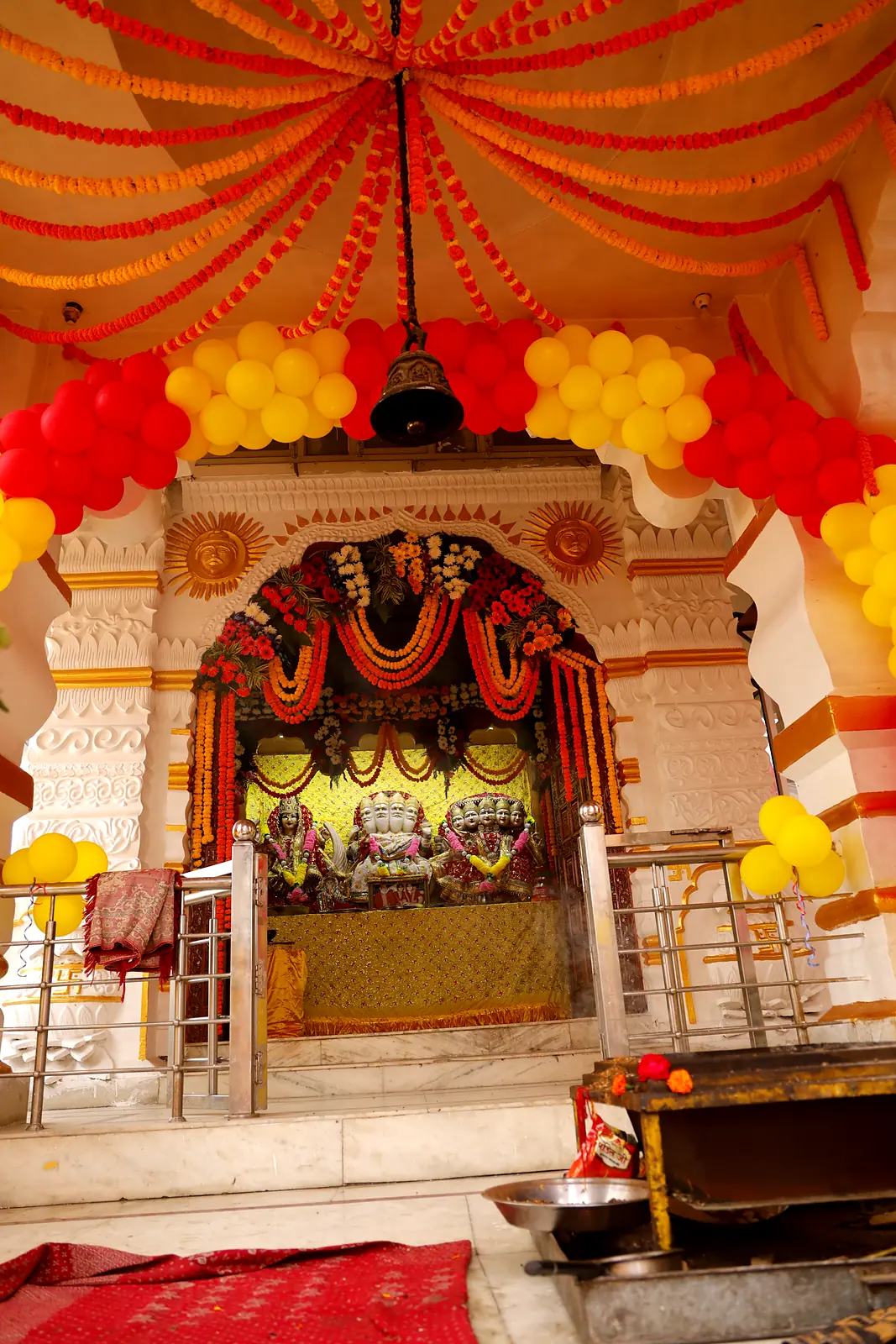
The vestibule between sanctum and hall, where the devotee pauses beneath the garlands before entering the Lord's presence.

The pillared hall for bhajan, satsang and gathering. Its white carved columns frame the shrines of the parikrama.

Carved niches along the walls hold the murtis of saints and deities, each a stop on the devotee's journey.
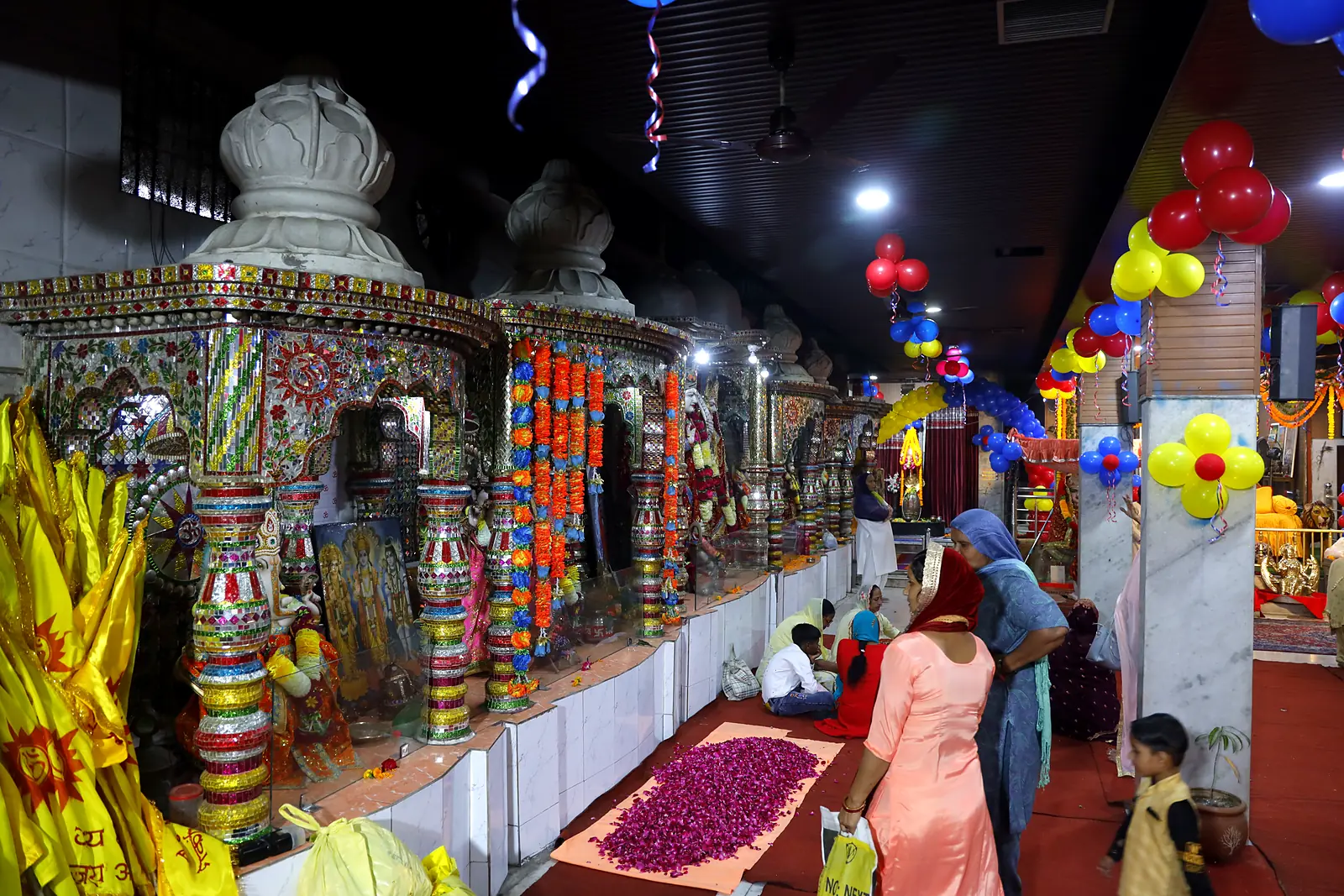
The covered path around the sanctum, lined with jewel-like mirror-work shrines, walked clockwise in devotion.
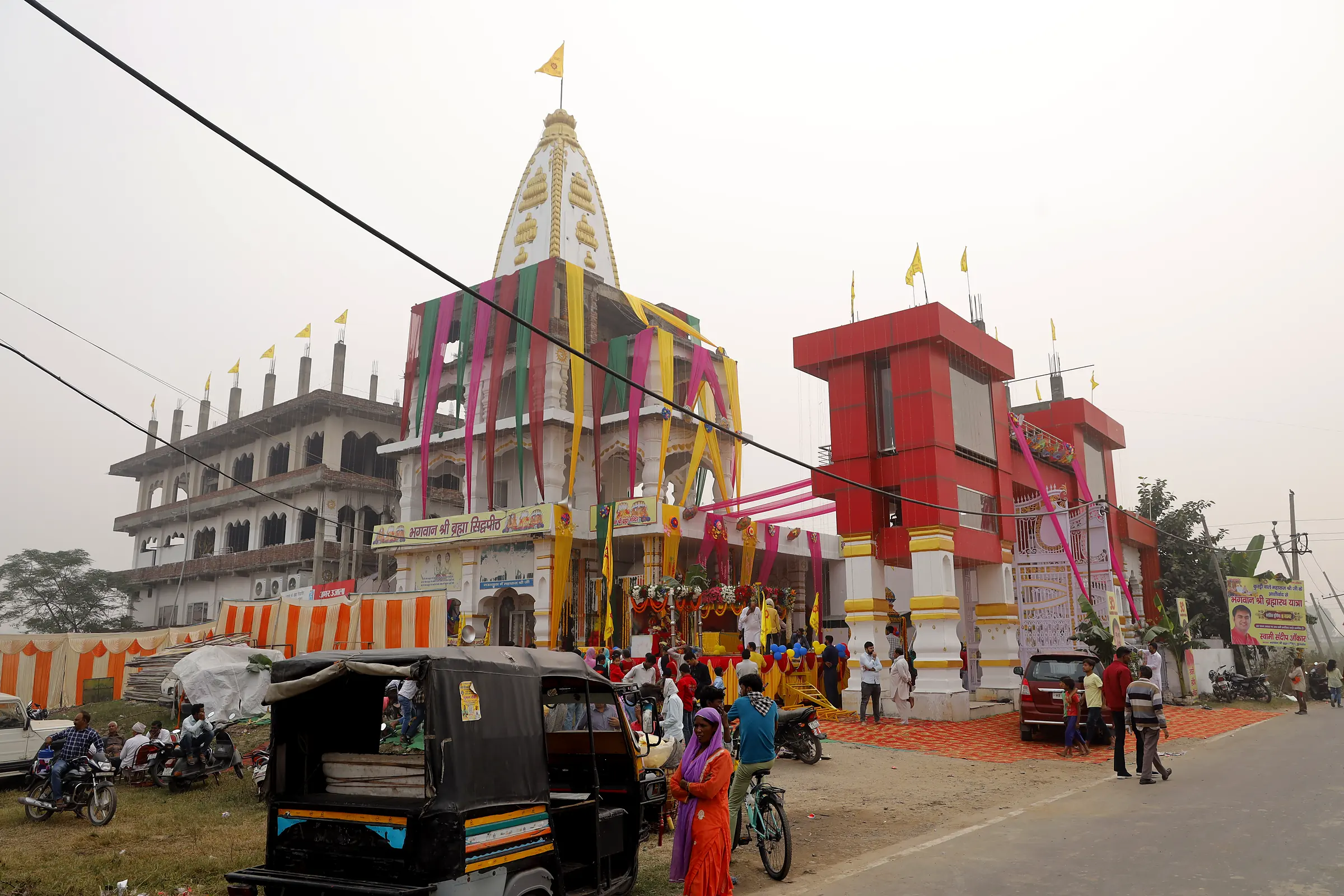
On festival days the whole temple is wrapped in silk drapes, marigold torans and lights — from the shikhara down to the sanctum door.
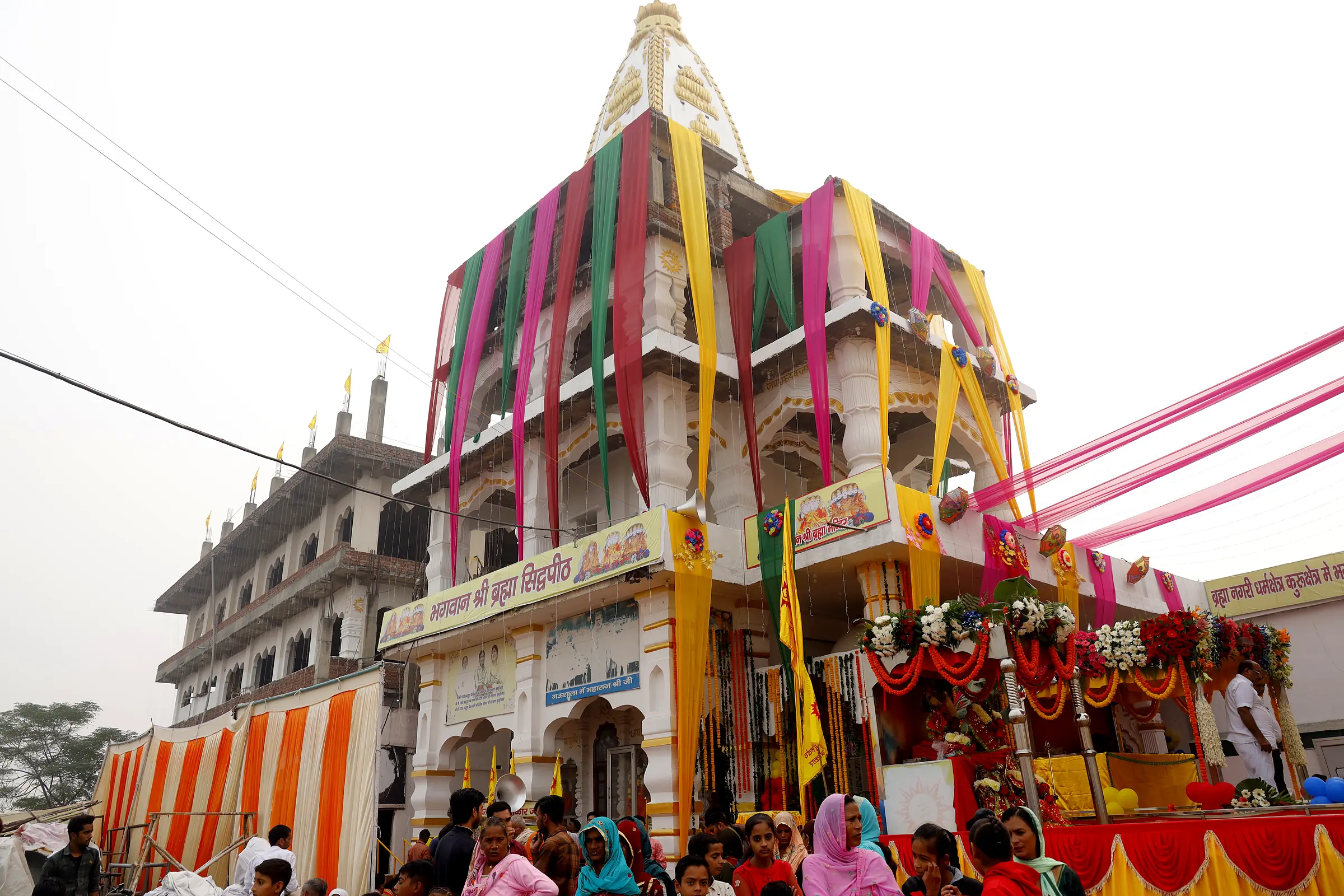 Wide view of the temple during the utsavShikhara wrapped in pink and gold drapes
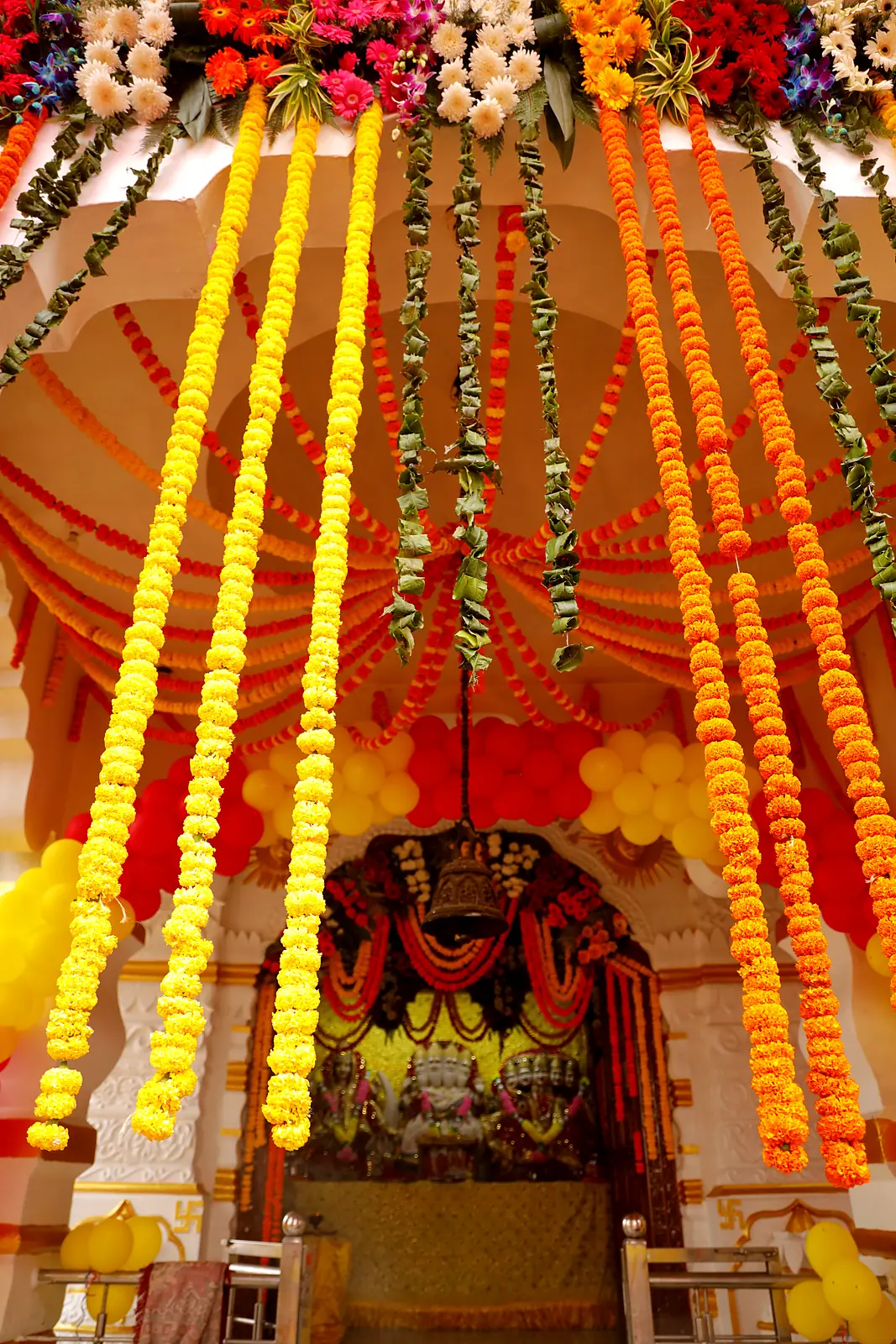 Marigold strings over the sanctum
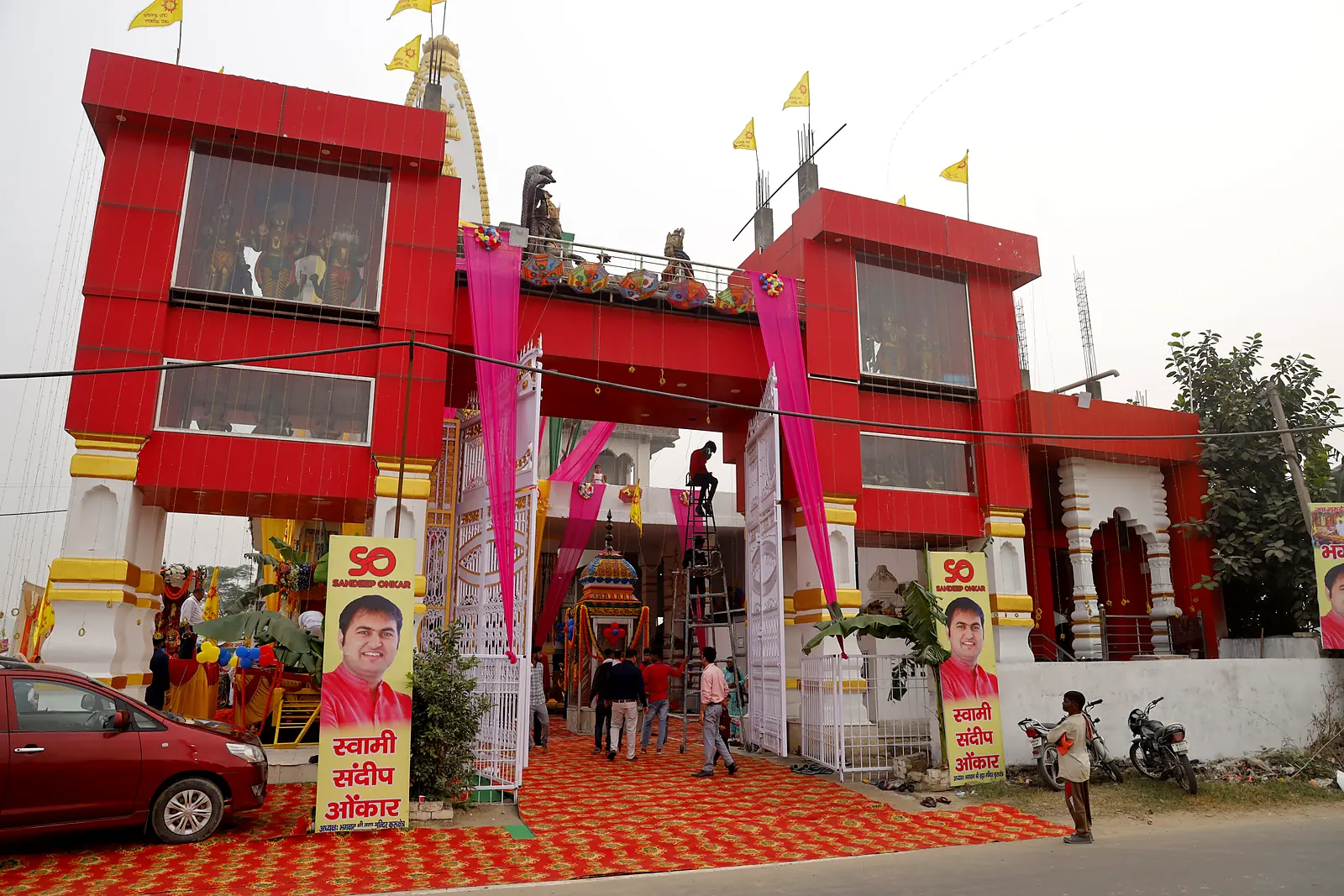 The red festival gateway of the temple
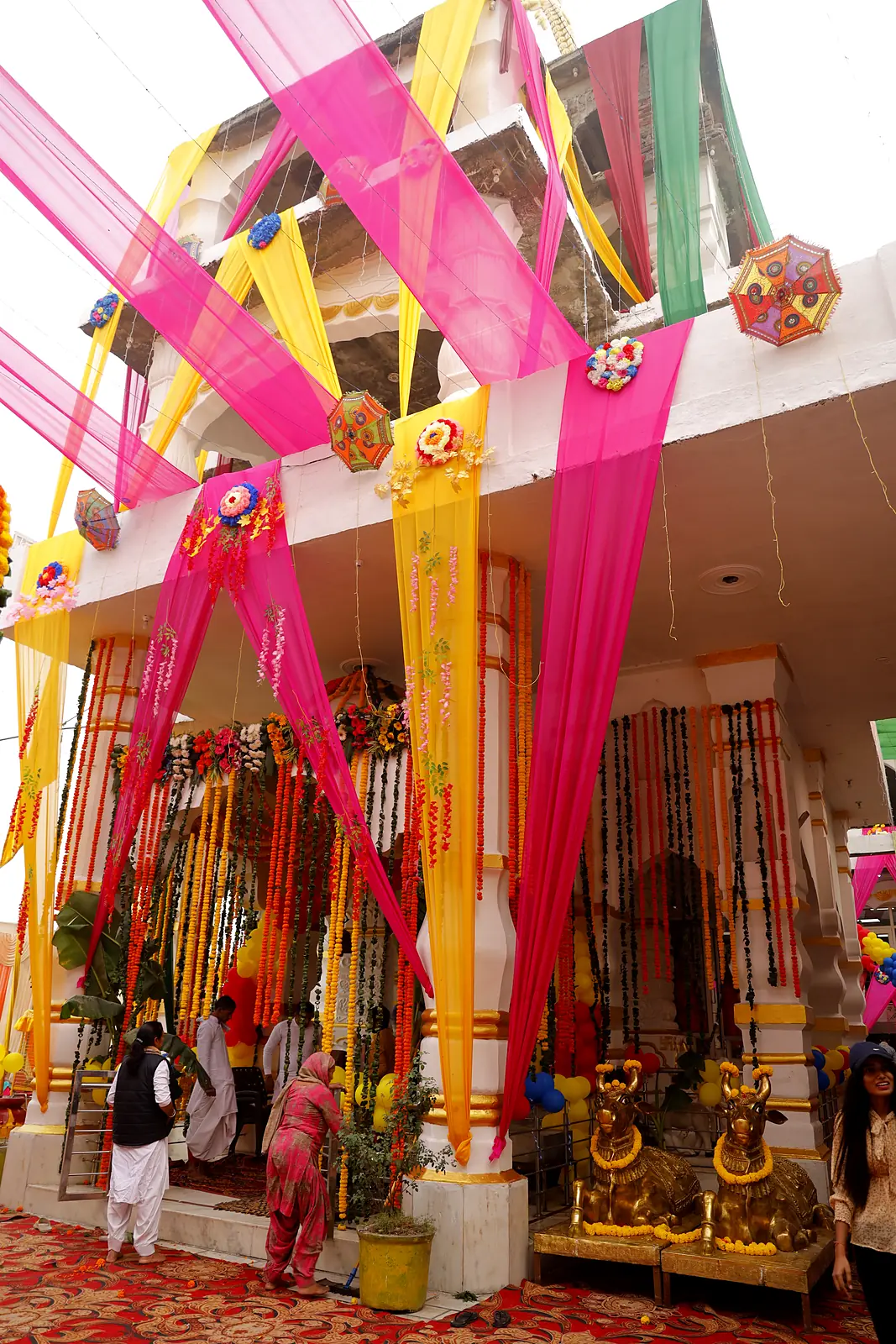 Festival canopy over the parikrama
 Temple bell before the sanctum
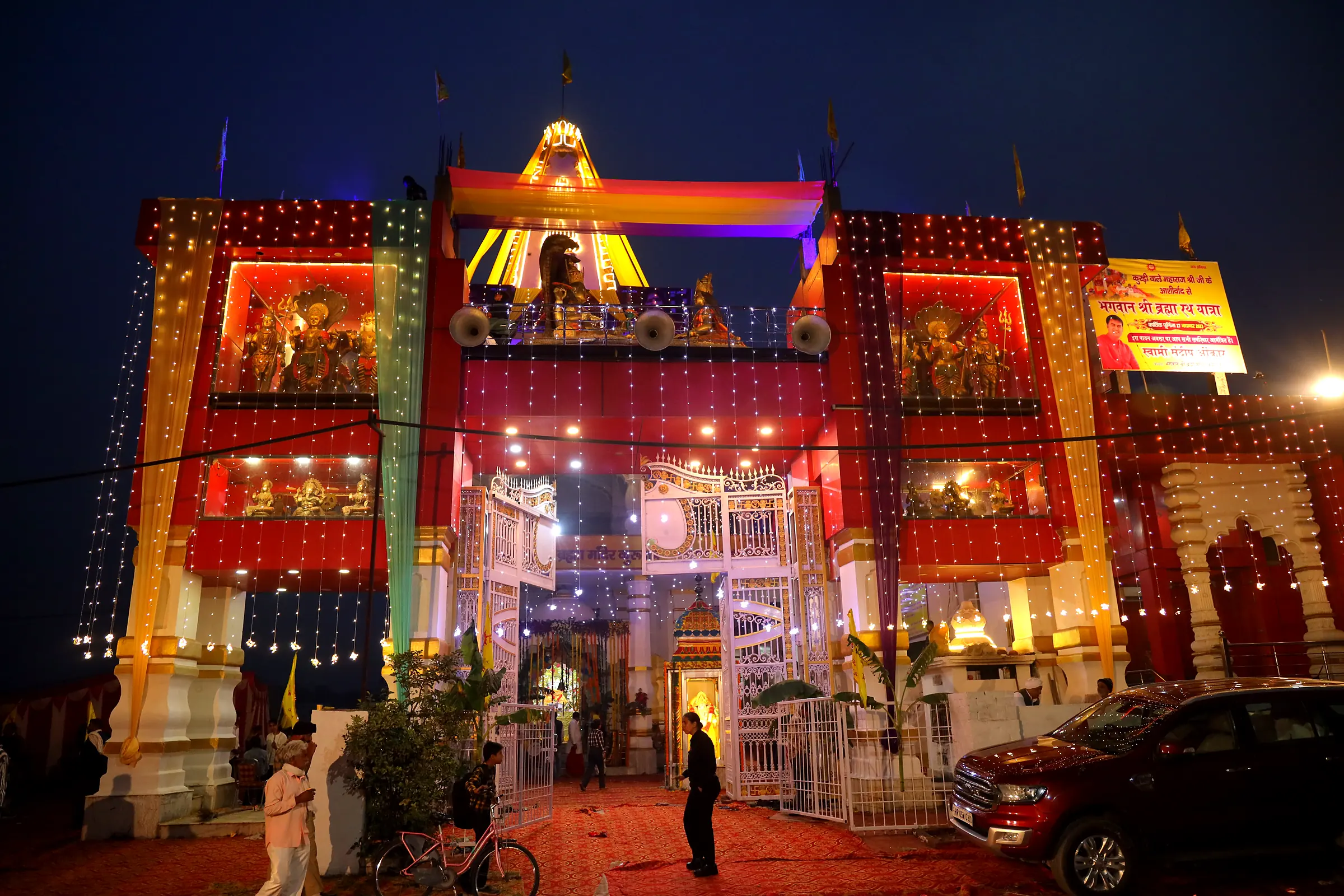
Before or after darshan, devotees walk clockwise around the sanctum — a practice called pradakshina. Moving around the deity, we acknowledge that God is the centre of our lives, just as the sun is the centre around which the planets move.
Walk slowly, chant softly, and complete an odd number of rounds — one, three or seven — as tradition recommends.